
Find Clark County Birth Records
Clark County birth records are handled through the Register of Deeds in Neillsville, and the office is built to move between modern copy requests and older family searches without making you guess which desk to use. The county office keeps births, deaths, and marriages on file, and it also holds related public records that help place a birth record in the wider county system. If a request starts with only a name and an approximate year, the county office can still point you toward the right form, the right route, and the right place to follow up. That is the practical way to begin here.
Clark County Birth Records Overview
Clark County Birth Records Office
The Clark County Register of Deeds is the county office for birth records, and the official portal places it at 517 Court Street, Room 303, Neillsville, WI 54456. The office can be reached by phone at 715-743-5163 and by fax at 715-743-5254. The office says it is the permanent repository for real estate documents, UCC fixture filings, federal tax liens, military discharges, and vital records. That mix matters because it shows the birth record is part of a much larger county archive, not a loose certificate line with no context.
Clark County says births, deaths, and marriages that occurred in the county are on file at the Register of Deeds office, while non-marital births and military discharges remain restricted. Public access is allowed, but the office also says it works to preserve record integrity. That balance is useful if you are trying to find an old record and want to know why some files are available while others are not. The county wants to help you find the right paper, but it does not treat every document the same way.
The office also gives a practical detail that helps with planning. In-person requests are handled from 8:30 a.m. to 3:30 p.m., and the county asks visitors to arrive no later than 3:45 p.m. so the staff can finish the copy request before the counter closes. Payment can be made by cash, check, credit card, or debit card, but American Express is not accepted. Those small rules matter because they show how the county actually processes a birth records request.
The official Register of Deeds page at clarkcountywi.gov/register-of-deeds is the best place to confirm the office role and the records it keeps.
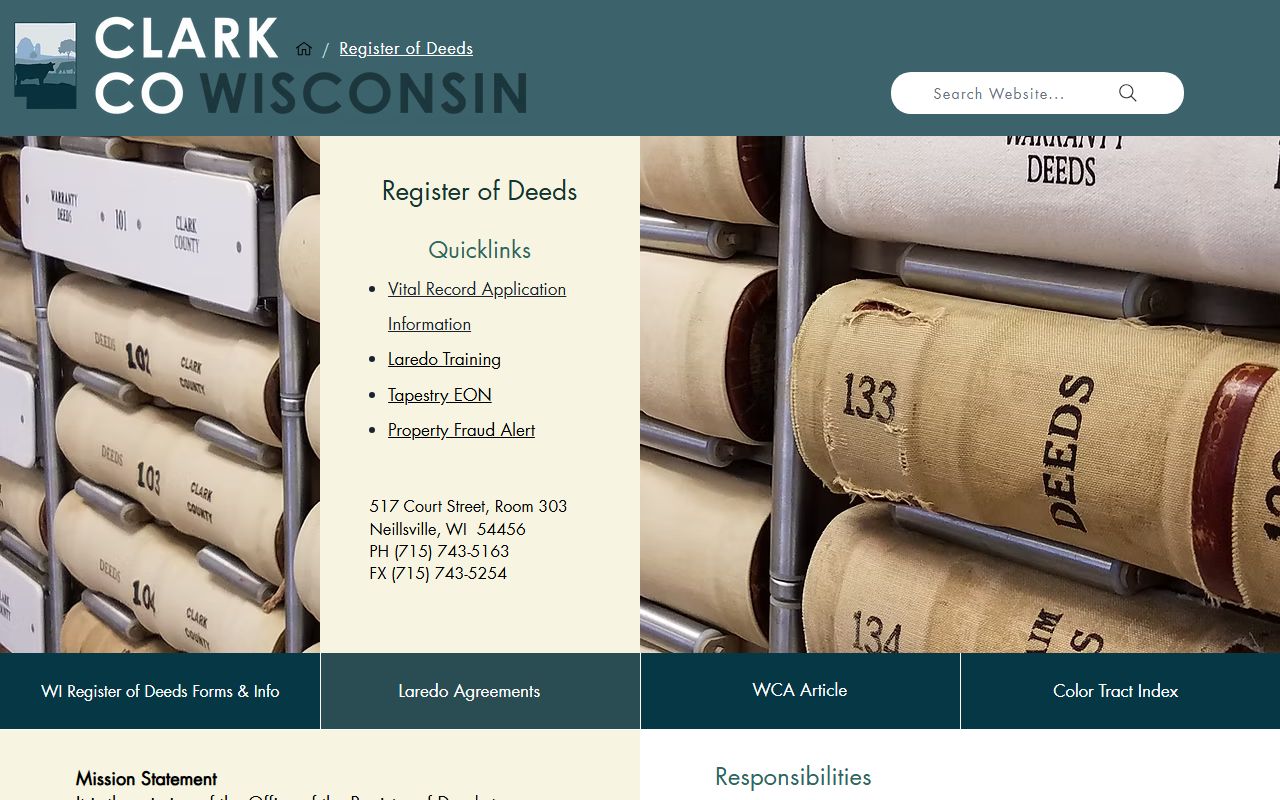
That office page is the clearest local signpost when you want the county repository and not a generic directory listing.
The county fee is $20 for the first copy and $3 for each additional copy ordered at the same time. That keeps the cost clear before you mail anything or step up to the counter. The Wisconsin State Law Library directory at wilawlibrary.gov/topics/countytopics.php?t=vit confirms the Clark County birth, marriage, and death certificate forms on the Register of Deeds page.
The county's authorized online partner is shown on the VitalChek page at vitalchek.com/birth-certificates/wisconsin/clark-county-register-of-deeds. That route is useful when you want a remote order but still want the county's approved path.
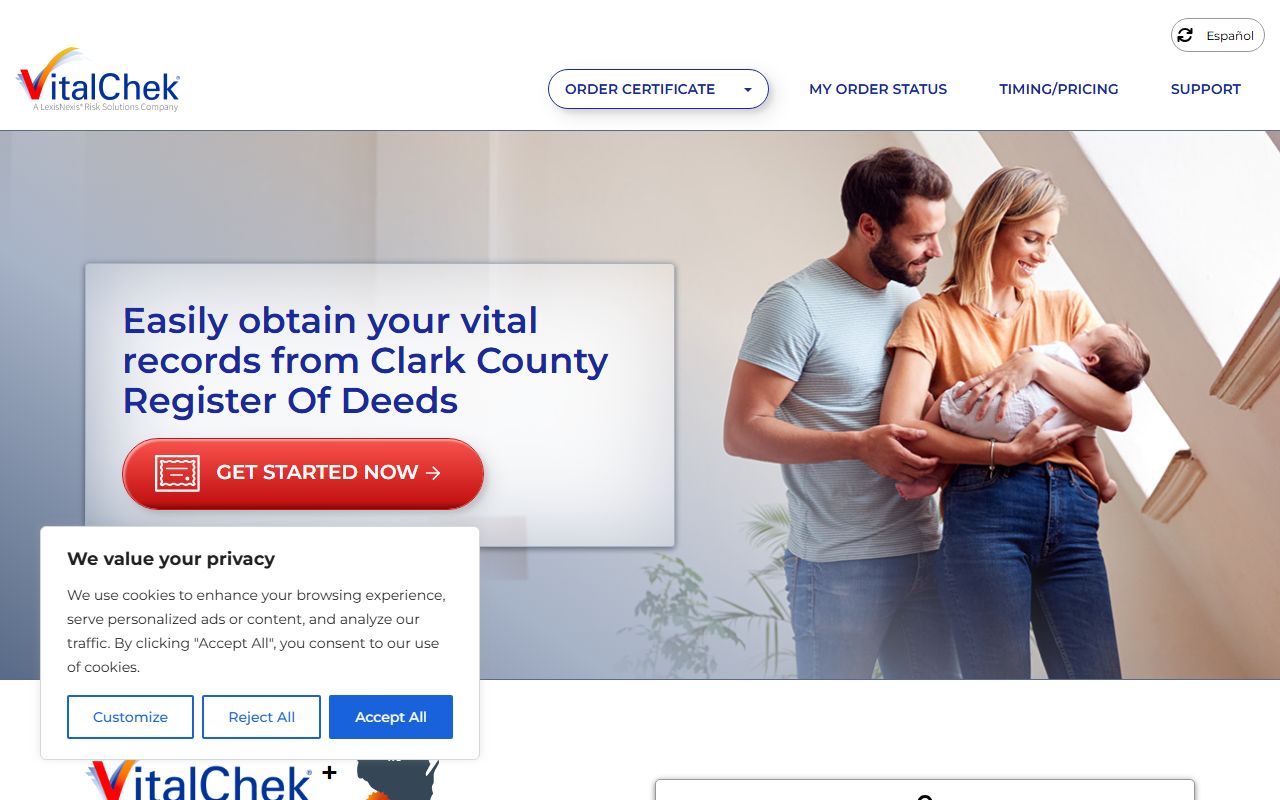
That VitalChek page is the county's approved online route for people who need a remote request instead of a trip to Neillsville.
The county's vital record application page at clarkcountywi.gov/rd-vitals-record-application-inform lays out the forms, the identification rules, and the mail and fax options for the same office.
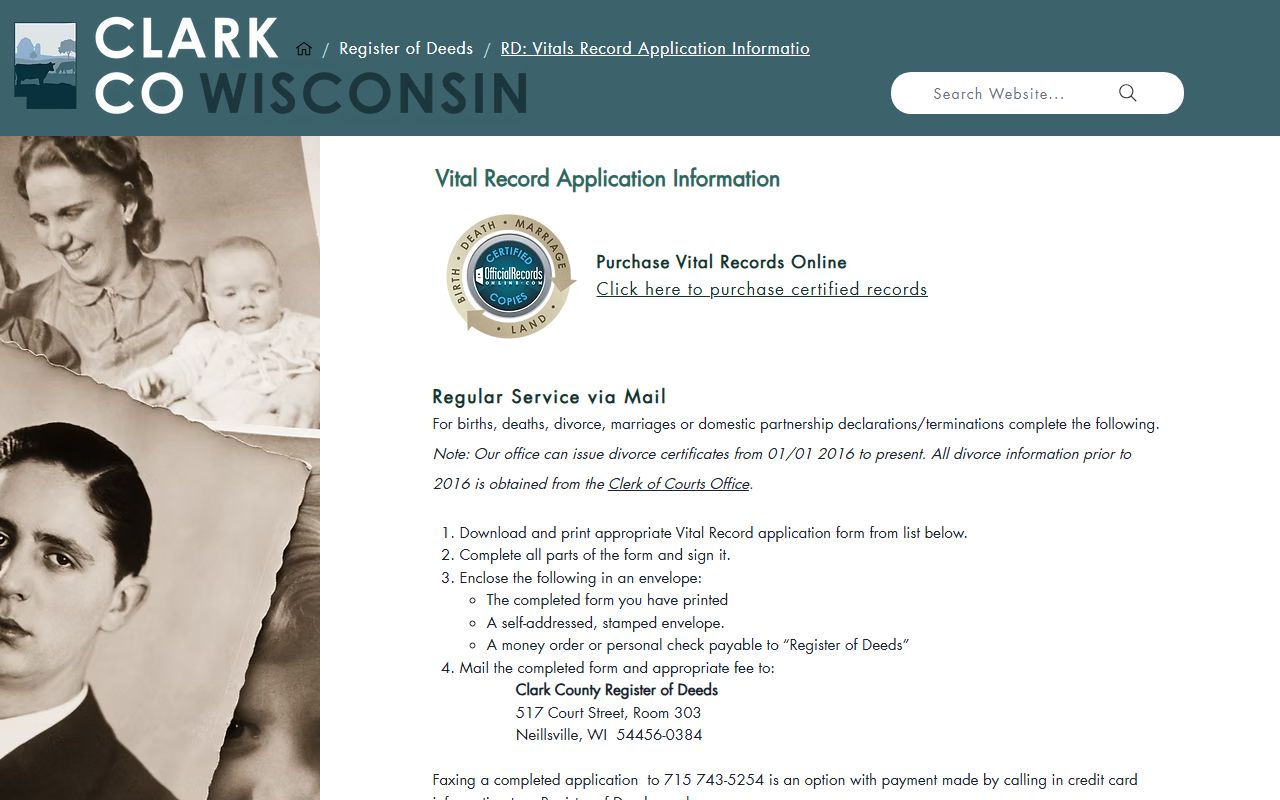
That page is useful because it shows the county's own request rules in one place before you start the order.
Genealogy requests in Clark County are handled by appointment only, which helps keep the research area organized and the records protected. The county also says the earliest birth registration in Clark County dates to 1860, so older family lines may need a mix of county books, historical indexes, and state guidance. If you need a quick confirmation before ordering, the office can confirm or deny provided information by phone at 262-548-7863, but it will not release record details that way.
How to Search Clark County Birth Records
Searches work best when you start with the full name, the birth date or year, and the place of birth if you know it. Clark County says identification is required for in-person requests and expired documents are not accepted. Accepted primary ID can include a state driver license, government photo ID, passport, tribal ID, or military ID, and the office also lists several secondary options if you do not have one of those. That makes the request process a little strict, but the rules are clear enough that you can prepare before you leave home.
Mail requests are straightforward. The county asks for the completed form, a self-addressed stamped envelope, and a money order or personal check payable to Register of Deeds. Faxing is also allowed, with payment handled by calling in credit card information. That is a useful option when the office is not nearby or when you want to keep the request moving without waiting for a front-counter visit. The county also accepts major cards with a small convenience fee.
The official application information page at clarkcountywi.gov/rd-vitals-record-application-inform is the best place to review the request steps before you submit anything.
- Full name on the birth record
- Approximate or exact birth date
- Current photo ID if you visit in person
- Mailing address for a return copy
- Parent names or family clues if known
VitalChek is the authorized online partner for Clark County. The county says it is the fastest remote route, although in-person requests are still the quickest overall. Genealogy requests must be submitted in writing directly to the county office, which is a useful distinction if your search is family history rather than a current certificate request. That keeps the online ordering lane separate from the research lane.
The Clark County VitalChek page at vitalchek.com/birth-certificates/wisconsin/clark-county-register-of-deeds is the approved expedited route for a county birth certificate.
For older records, the Wisconsin Historical Society birth portal at wisconsinhistory.org/Records/?type=Birth and the pre-1907 guide at CS180 are helpful when the county page points you to an older family trail instead of a current certificate.
Note: Clark County says the most complete set of older vital records is usually in the Register of Deeds office rather than the state office, especially for years before statewide registration.
Clark County Birth Records Copies
Clark County charges $20 for a birth, death, or marriage certificate. The county says certified and non-certified copies are issued upon receipt of the proper fee, so the request really comes down to choosing the right form and supplying the right proof. That is the part people miss when they assume a birth record is a simple one-step order. In Clark County, the office wants the form complete, the ID correct, and the payment ready.
The copy rules are useful because they also help explain the county's role in the broader Wisconsin system. Births before October 1907 often stay best traced through county-level records, and Clark County's own office is the place that keeps those books or points you to the right local source. If the record is old, a county search is often more useful than a state mail order because the county still has the complete trail for that period.
Wisconsin law in Wis. Stat. § 69.21 explains the certified-copy rule, while Wis. Stat. § 69.15 covers changes of fact on a birth record. Those rules matter when a family file needs both a copy and a correction path. They also explain why the county asks for a written form and why the state office can become part of the process if the record needs an amendment.
The Wisconsin DHS vital records page at dhs.wisconsin.gov/vitalrecords/index.htm is the best state fallback when the county office cannot issue the exact copy you need right away.
The Wisconsin DHS applications page at dhs.wisconsin.gov/vitalrecords/applications.htm gives the mail-in forms and ID checklist if you need a backup route or want to compare state instructions with the county form.
For research work, the county's genealogy rules are strict. Requests must be scheduled, devices are restricted, and the office limits the room to careful use. That is a strong sign that the records are being protected, which is what you want from a county archive.