
Search Barron County Birth Records
Barron County birth records start with the county office, but the best path depends on the year, the name on the record, and whether you need a copy or a research hit. The Register of Deeds keeps the local birth file, and the county also sets clear rules for in-person genealogy use. If you are tracing an older record, the state index and historical collections can help you move from a name and date to the right office. Start local, keep your facts tight, and use the office that matches the event date.
Barron County Birth Records Overview
Barron County Birth Records Office
The Barron County Register of Deeds is the office to contact when a birth or death happened in Barron County. The county says that if the event took place here, the Register of Deeds at 335 E. Monroe Avenue in Barron can help you start the request. The office phone is 715-537-6210. That makes it the first stop for people who need an official copy, a quick check of the file, or help figuring out which year range applies.
Barron County also has a strong local research setup. The Wisconsin Register of Deeds Association profile for the office lists Margo Katterhagen as the register, with office hours on Monday from 8:00 a.m. to 4:30 p.m. and staff support from Steffanie Gonyer and Samantha Sommerfeld. The profile places the office at 335 E Monroe Avenue, Room 2500, Barron, WI 54812-1478. Use the county page first, then use the WRDA profile if you need a cleaner view of office contact details or local access timing.
The county vital records page at Barron County Register of Deeds is the direct request point for an official birth record copy and a fast local check.
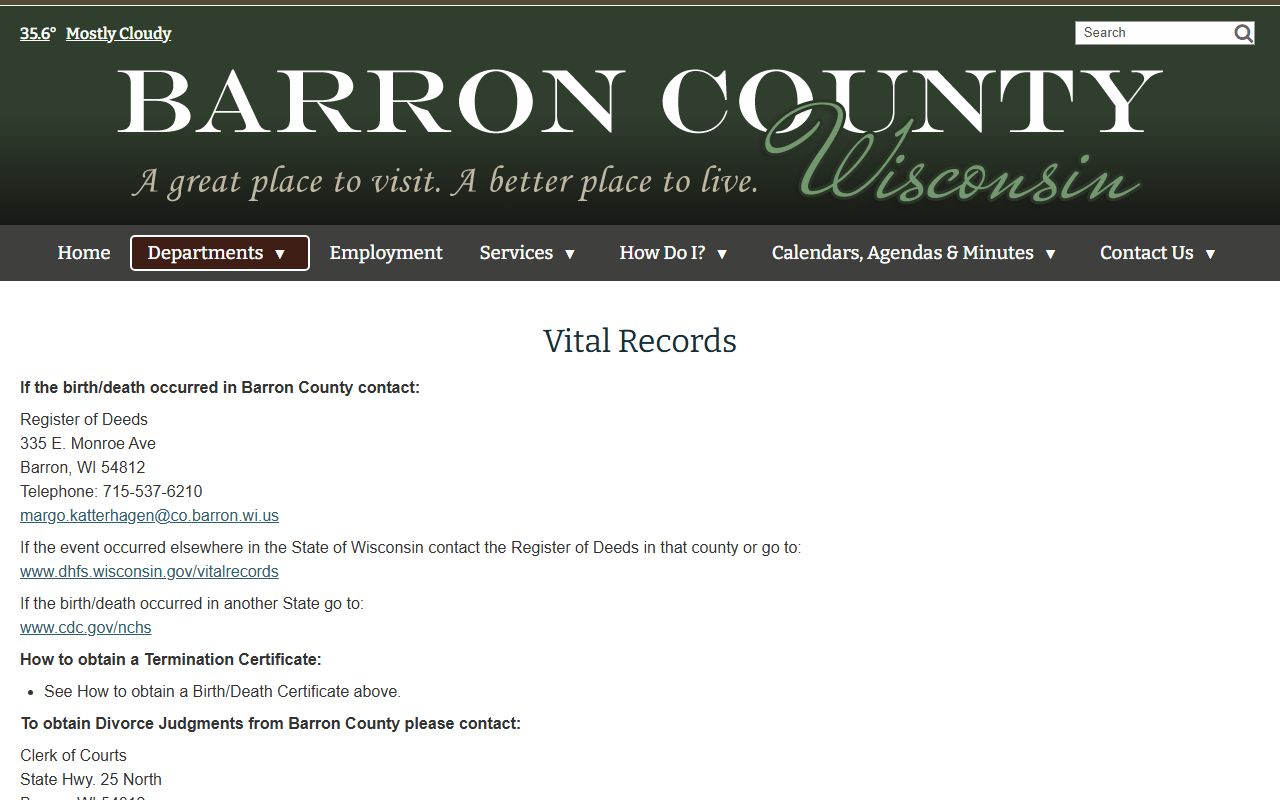
That page is useful when you want the county's own contact path before you move to a state office or a history search.
Note: If you know the event happened in Barron County, start with the county office first so you do not waste time on the wrong office or year range.
Barron County Birth Records Search
The county genealogy rules page is built for careful in-person research. Barron County says the historical documents are open to the public, but the search area has strict limits. You need proof of identity and a signed application before you work in the vital records area. That setup matters because it keeps the books safe while still giving researchers a real path to older birth entries.
When you come in, move slowly and bring only what you need. The county does not allow food, bags, cameras, copy machines, or children under 12 in the vital records area. You cannot take pictures of the records, and the office allows only pencils for notes. Researchers also must go directly to the volume and page they want. Those rules are tight, but they protect the books and save time once you know the exact entry you want.
The Barron County genealogy rules page is the place to read those limits before you go. It also lists 1877 as the earliest birth registration date, which gives you a clear starting point for old family lines.
Before you head in, it helps to gather a few basics.
- Full name of the person on the birth record
- Approximate birth year or a small date range
- Proof of identity for in-person research
- A signed application for the vital records area
- Any parent names, place names, or family notes you already have
If you are not sure where to begin, use the county page to confirm the office address, then compare your dates against the 1877 starting point. That keeps your search focused and avoids a long walk through books that cannot help with your year.
The county research page at Barron County Register of Deeds explains the rules in plain terms and shows why careful prep matters before you sit down with the old volumes.
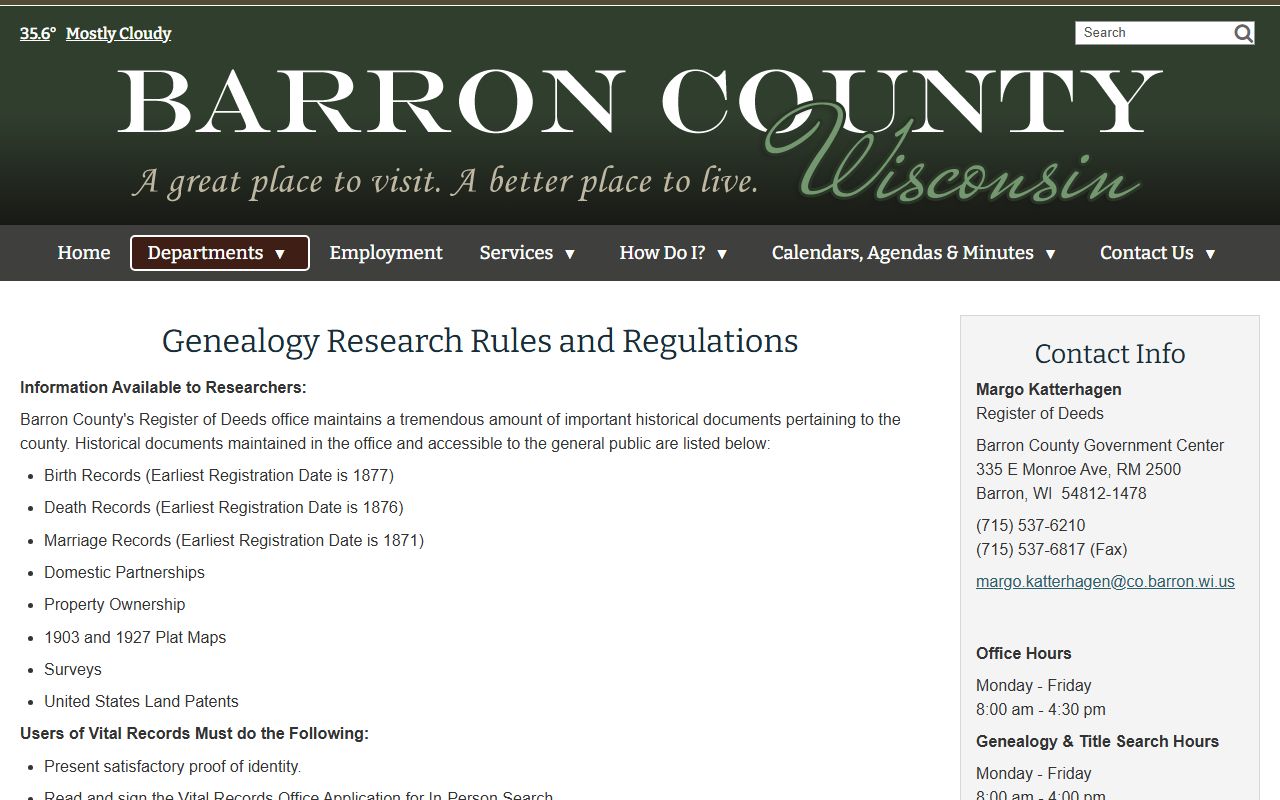
That guidance matters most when you are working with older books and need to stay inside the office rules from the start.
Barron County Birth Records and State Access
County records are not the only path. Wisconsin's state vital records system also matters when a Barron County request reaches beyond the local book set. The Wisconsin Department of Health Services explains that birth records from October 1907 to now are handled at the state level, while county offices remain part of the local network. That means you can use the state office for qualifying records when the county office is not the best fit.
For a broad state search, the Wisconsin Historical Society gives you a birth-record portal that reaches into pre-1907 research. The Society's collection is useful when you have a name but the county office is not enough to finish the search. It also helps when you need to compare an old index with a county book entry. For Barron County, that matters because the county's earliest birth date starts in 1877, well before the statewide line, and the historical source can help narrow the trail.
The state birth search portal at Wisconsin Historical Society birth records gives you a way to look for names before you ask for copies. The pre-1907 guide at Wisconsin Historical Society pre-1907 birth records explains why some names appear only in older county or archive collections.
Barron County families who need an official copy can also work through the Wisconsin state office. The DHS page at Wisconsin Vital Records request page explains mail, phone, and online options. It is a useful backstop when you know the record is real but want the cleanest route to a copy.
When a record is still missing, the state law on certified copies can help you understand the request path. Under Wis. Stat. § 69.21, certified copies are issued through the registrar system when the written request and fee are in place. That is a practical rule, not just a formality, because it tells you why a basic search result and a certified copy are not the same thing.
Use the county office first, then move to the state tools if the birth falls outside the local shelf, the request needs a certified copy, or you are tracing a line that starts before the county books are easy to read.
The WRDA profile at Wisconsin Register of Deeds Association helps round out the local picture with office hours and staff names, which is useful when you want a live person on the phone before you mail a request.
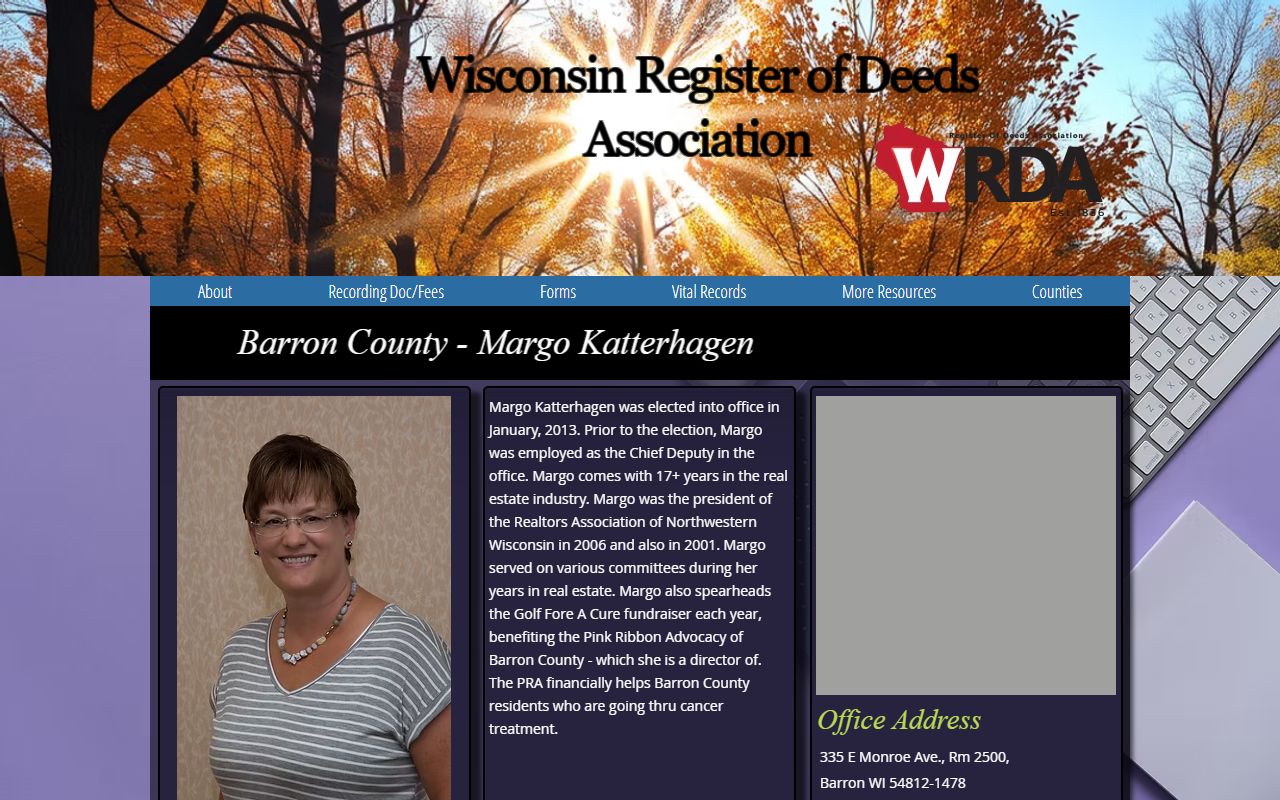
That profile is a practical companion to the county page because it confirms the office rhythm and gives you another official place to verify the same local facts.
Note: A county search can answer a lot, but the state index and historical collection are worth checking when the birth is old or the family name appears in more than one form.
Barron County Birth Records Copies
If you need a copy, start by matching the office to the event date. Barron County can help with local births and deaths, while the state system handles the wider path for qualifying records. The cleanest way to avoid a delay is to bring the name, date, and any parent details you already know. That makes the clerk's work easier and keeps the request from bouncing back for missing facts.
For a mail request, use the county address listed on the official page and include the right identifying details. If you are asking for a certified copy, remember that Wisconsin's copy rules come through the registrar system, not through a general office desk. The wording in Wis. Stat. § 69.21 helps explain why the request has to be written and tied to the proper fee.
If your search points to a correction or a changed fact on the record, the state law on amendments becomes useful too. Wis. Stat. § 69.15 covers changes of fact on Wisconsin birth records, including court-ordered updates and adoption-related changes. That is important when a family line is real but the record needs an update before it can be used the way you expect.
For most people, the main question is simple: where do I start, and who can hand me the copy I need? In Barron County, the answer is local first, state second, and historical tools when the record sits deeper in the past. That mix gives you a fair shot at both a modern certified copy and an older family trail.
If you want one last official place to confirm the broader state process, use Wisconsin DHS Vital Records. It keeps the request options in one place and helps you compare county access with state access before you send money or wait in line.